

For the past few years, all SaaS businesses have been rallying due to the ‘AI boom’. This didn’t make sense to us as a broad rally because it should be fairly obvious that AI presents both opportunities and threats to SaaS businesses. Some will win big, but others will be hurt, and some may even face an existential threat.
In this update, we will cover our thinking on the threats to SaaS in the age of AI. In the next installment, we will discuss the defences that SaaS companies can use against these threats, and finally, the opportunities that AI offers to technology businesses (they’re big).
Let’s start with an extremely brief summary of what we know so far.
The end of coding (as we knew it)
In November of 2022, OpenAI released ChatGPT. Although large language models had existed previously, the nature of the ‘Chat’ implementation was revolutionary in its ability to maintain the context of a conversation. ChatGPT was also immediately useful for computer programming questions, albeit with a lot of mistakes and hallucinations.
New models continued to be released, with ever-increasing capability, and the next big leap was the release of the first ‘reasoning’ model called o1, again from OpenAI, in September 2024. Reasoning models use additional inference to ‘think’ for longer and to plan a series of steps. This allows the LLMs to handle radically more context and produce far more advanced outputs. Again, this was particularly useful in computer programming.
A few months later, in February 2025, Anthropic released Claude Code, whereby the LLM acted as an ‘agent’ able to autonomously write and improve code itself (with human supervision) directly from the same terminal that a computer programmer would typically use.
The leaps in programming capability over the past few years have been astounding.
For anyone who was coding before 2022, the process was to have an idea of what you wanted to build, to write some code, hit an error or problem, and then figure out a way around that problem. Coding was a battle of logic and perseverance. It was overcoming one problem after another, all leading to solving the much bigger and more complex problem of what you were trying to build.
When stuck with a software bug, one of the tools that programmers leaned heavily on was Stack Overflow – a forum where coders could ask and answer questions on programming. Typically, someone else had already asked your question beforehand, and so you could often immediately find the answer you were looking for (or something close to it) without even having to ask your own question. It was a wonderful two-sided network, and it became core to the daily life of a developer.
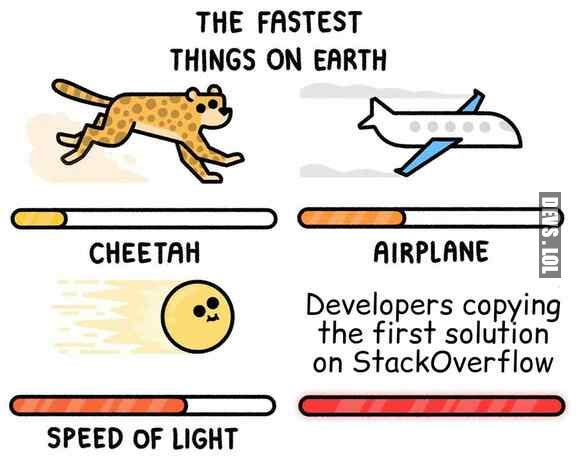
However, over the past few years, that has all changed with the rise of LLMs and then coding agents.
AI’s immense disruption of software is perhaps best shown in the number of questions asked on Stack Overflow over time:
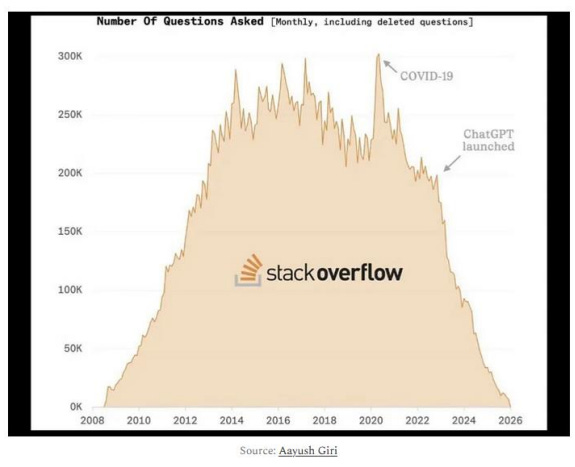
As of early 2026, the Stack Overflow era is over.
I can attest to this with my own programming journey. In 2018, after teaching myself to code, I set out to build a web app to ‘process’ ASX announcements and send me (and any other user that signed up) alerts based on certain keywords, etc. This took me months of learning and coding in my nights and weekends to build. I would be stuck on a single problem for a week, writing and rewriting code to figure out one bug, only to unlock the next level of bugs. It was rewarding, but wow, it was a painful slog at times.
In late 2023, I rebuilt much of the functionality with AI again from scratch in a few weeks. In 2025, I rebuilt everything (with a few improvements and with AI-powered summaries) in a few days.
Last week, in 2026, I rebuilt this same functionality but vastly improved it, including a way for me to chat with an AI agent about the database, from scratch, in a single evening. And this time, it’s not really fair to say that I built it. In truth, I asked my coding agent to build it, and then it built it, shaped a little by my feedback along the way.
The end of coding was perhaps best captured by this bittersweet tweet from Aditya Agarwal, former CTO of Dropbox.
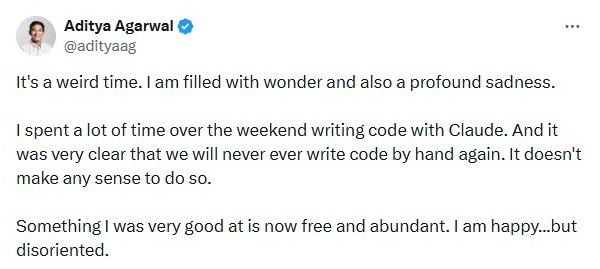
Writing code is now free and abundant.
Writing code, the prized and scarce competence that we told kids to study to guarantee a high salary, is now free and abundant.
There are huge positives to this, and when things become free and abundant, there are always immense fortunes to be made. The miracle of software is that it is ‘infinitely replicable at zero marginal cost.’
Well, now software is also ‘infinitely producible at zero marginal cost.’
And it’s not just software. Although code may be the ‘tip of the spear’ for AI capabilities, AI agents are rapidly developing competency in all sorts of knowledge work, from writing, drafting PowerPoints, and analysing Excel spreadsheets. For the purpose of this post, we’re going to focus on software, but we think that many of the most attractive investment opportunities will come from other areas, like applying AI to services.
As we mentioned at the top, we’re going to focus on the threats in this update, but Enterprise SaaS businesses do still have many defences that we will touch on in our next update. Even better, we think some (those we own) actually have an immense opportunity to leverage AI to grow even bigger.
But for today, the threats.
The Threats
Free and abundant code provides several disruptive threats to the traditional Enterprise SaaS business model. We’re going to outline five prominent ones:
#1: I Did It My Way: The Rise of Self-coding Customers
This is commonly derisively called ‘vibe-coding,’ but we mean something bigger than that; by self-coding, we mean any customer that decides its software is something that is worth doing themselves.
For any business resource, a company must decide if it is better to build it themselves or to buy it. When it comes to software, this has been an easy decision for most businesses for the last few decades: unless you had some expertise in software development, it was almost always better to buy than to build.
A primary driver of this was the pace of technological change. Moore’s law and continuous technological improvements meant that to have decent software, you had to constantly invest in improving and updating it. It also meant that to be competent enough to create it, you had to constantly invest in improving and updating your own software writing skills.
If a plumbing supply business wanted to have great warehouse management software, it had to be both great at plumbing supply and great at software development.
Put simply, if coding hadn’t changed much in the last hundred years, then it would have become an easily learnable skill, and many more companies would have managed it internally. For example, customer service is a very important business process, but most businesses run it internally because they get some benefits (learning more about what their customers like) without many drawbacks (versus outsourcing).
As software becomes free and abundant to produce, it makes it easier for businesses to build the code they need to run their business internally. This ranges from a business hacking together a ‘good enough’ self-coded solution for a non-critical piece of software, to a large complex business that already has a dedicated dev team and builds some of its own software deciding to move even further into building all of its own.
So far, the impact has only been seen with simpler software, what is often called a ‘point solution,’ such as a piece of software whose entire job is to check if an email address is real. There are millions of little ‘point solution’ pieces of software like this that businesses may use (such as to run a mailing list). These small SaaS businesses, usually too small to be publicly listed, are already being replaced by self-coding.
The damage has been limited to these simple solutions because the coding agents themselves could only handle a certain amount of context before they got confused and began to spiral.
The big change that came in December was a combination of better models, bigger context windows, and simple new innovations like automatically compressing and compacting projects to maintain coherence. The result was that the level of software that could be self-coded increased dramatically.
We are still not at a point where it is easy for a customer to self-code something as complex as an Enterprise resource planning system used by thousands of employees across multiple countries. But the direction of travel is important.
We can think of the build versus buy decision in Enterprise software as a landscape, where software complexity is the elevation above sea level. Everything below the water level represents software that businesses can build themselves.
Before AI coding agents, the number of software jobs-to-be-done that could be built internally was pretty small—perhaps just a few Excel macros and bespoke scripts at most businesses. But over time, as AI agents increase in ability, the water level rises, and more and more complex tasks could now conceivably be self-coded.
The question now isn’t whether AI coding agents will keep getting better. With model size increases and other innovations that expand context windows, they almost certainly will.
It’s whether the before and after will look like this, with most software still outsourced to Enterprise SaaS providers:
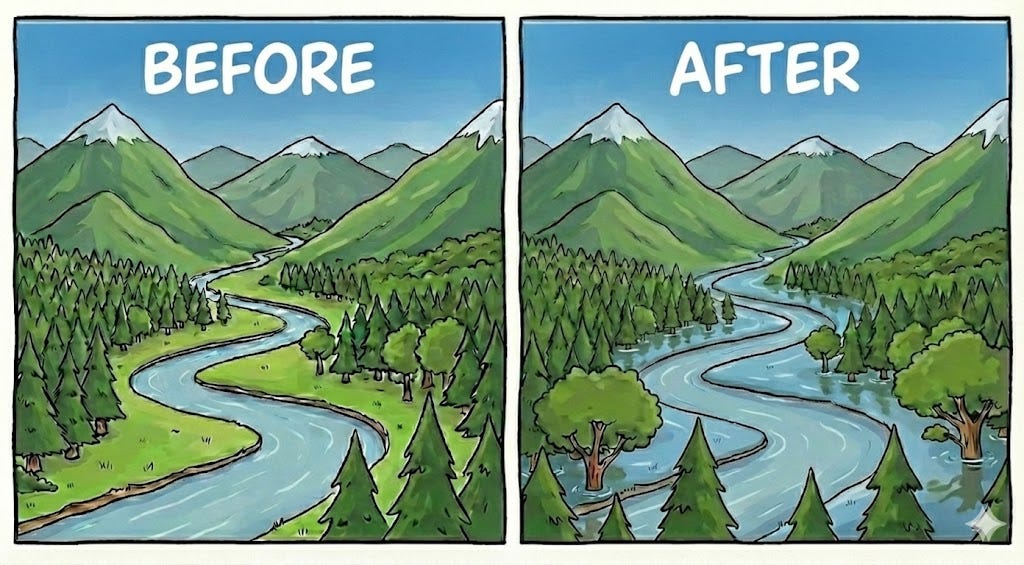
Or this, with only the most complex and defensible SaaS being immune:
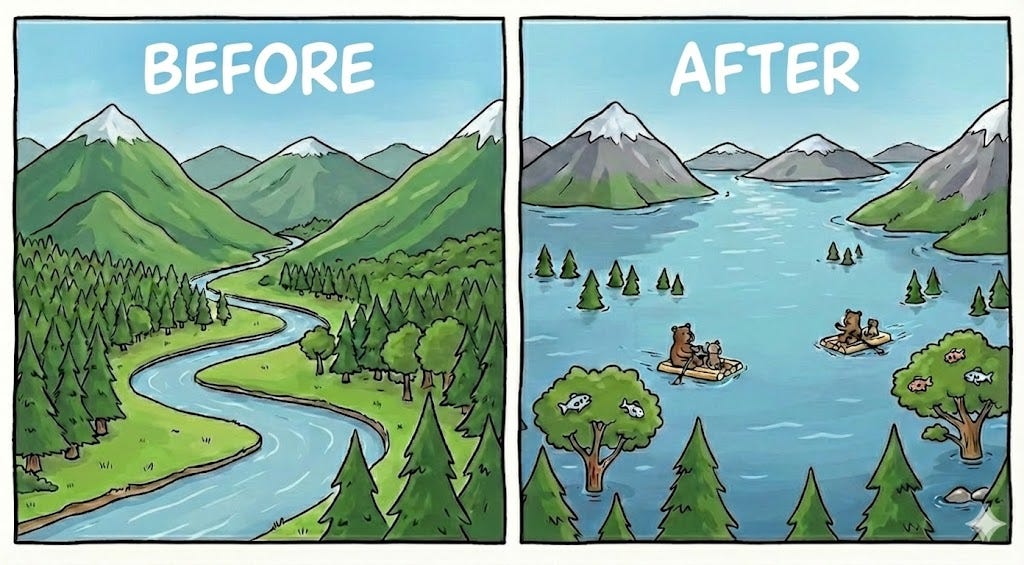
With more complexity comes a greater threat to Enterprise SaaS because it becomes increasingly possible for a business to develop its own software without having to invest in also being great at developing software.
But as anyone who has tried cutting their own hair knows, just because something is technically possible, doesn’t mean it’s a great idea.
Taking the small-business accounting software platform Xero as an example, it’s possible that AI coding agents will keep progressing to a point where a tradie small business owner customer could self-code a replacement AI platform. But there are a lot of reasons to think that it would be both a bad idea, and the tradie would much rather pay someone else to do it so he could get back on the tools.
So in Xero’s case, self-coding does indeed seem to be a limited threat. It could possibly limit pricing power for the marginal customer, but for most of their small business customers the hassle and risks of self-coding would outweigh the advantages.
For larger Enterprise software providers with sophisticated, giant clients that already have some technology capacity internally? Well, that might be a different story.
#2: Ultra-lean Startups: Your Margin Is My Opportunity
Another obvious threat, as building software trends towards being free and abundant, is from a new wave of ultra-lean startups.
One of the defences for large Enterprise SaaS businesses previously was that software took a lot of money, and most importantly, a lot of time to build. AI coding agents mean it is now feasible for an ultra-lean small team of developers (say 5-12 people) to use a swarm of AI coding agents to replicate a large SaaS product.
Since the total cost to replicate the SaaS product has fallen, this new startup now requires less total revenue to earn an attractive return on its investment. This means the ultra-lean startup could offer its product at a significantly lower price than the incumbent. It also means that the new startup only needs to win a much smaller number of total customers to continue covering its costs and keep sniping away at the larger player.
On its own, we don’t see this threat being particularly damaging for most SaaS businesses. The margins in SaaS have always been absurdly attractive at scale, and we don’t usually see customers switch due to price alone. But we mention it because this change alone could conceivably reduce the pricing power for an Enterprise SaaS product.
Looking at Xero again, their strategy (and valuation) prior to this latest AI-driven selloff had become heavily based on pricing power—i.e., aggressively increasing prices by 10–15% a year. This is where ultra-lean startups are most threatening in our view, not in killing an existing business, but in limiting their ability to raise prices aggressively by making it dramatically cheaper for a competitor to enter the market at a lower price.
It would only be the marginal customer that switches due to price, but over time, that incremental churn threat can add up to limit the ability for a large Enterprise SaaS player to ‘raise the rent’ forever.
#3: Watch The Flanks: The Threat From Horizontal Entrants
Related to Ultra-lean startups, we see a more dangerous threat coming from large technology businesses that decide to expand horizontally into new areas.
As software becomes more abundant, what is stopping an online stock broker like Robinhood also offering personal tax management software? Or DoorDash stepping into offering restaurant Enterprise Resource Planning software? Or Stripe expanding into small business accounting software? (hello Xero).
What might have been seen as a distraction before now becomes much more viable if the software build can be accomplished by a small internal team. Imagine that the ultra-lean startup team is instead working for a giant in a related space with deep pockets and existing distribution relationships with customers. Any incremental revenue from the same client is a bonus, and it allows the horizontal entrant to more deeply integrate into their customer’s operations.
This is also an opportunity of course for any given Enterprise SaaS business, if they can be the ones that expand horizontally (or vertically) into another business’s turf and eat their lunch. But the net result is likely to be greater competitive intensity and once again, investors need to be much more selective over carefully picking winners.
#4: AI-native Startup: Built Different
Like the ultra-lean startup, this is the threat of a new entrant to the industry. But unlike simply doing the same old SaaS but at a lower cost-structure, the AI-native software startup has built a product that serves the same customer job-to-be-done, but in an AI-first way.
To give a Xero example, an ultra-lean startup competitor would be offering small business accounting software, but cheaper. An AI-native startup may offer something more akin to the accounting service itself, with most of the jobs (reconciling bank feeds, payroll, etc.) automatically performed, and the software interface only used to handle edge cases.
Or alternatively, it could be offered as an accounting service (with some humans involved by AI) but heavily powered by AI to lower the total cost, and with some type of dashboard software for the customer to pull reports.
These are obviously not happening today, but they are probably on the edge of what is already possible in our view, with how far AI agents have already progressed.
#5: Pure Agentification: The Omega Threat
We mentioned this one last because it requires continued development of AI models over the next few years. We aren’t there yet, because the AI models acting as agents just aren’t good enough. But if agents continue improving at a similar pace to recent years, then we think this is the direction of travel.
Pure agentification would occur if your primary way of getting a particular job done is to talk to your favoured leading-edge AI model, whether that is OpenAI’s ChatGPT, Anthropic’s Claude, Google’s Gemini, or if you’re particularly edgy, Elon Musk’s Grok. The AI model would then operate everything itself, talking to other software as needed, and liaising across multiple technology and service providers to get things done.
This single ‘Super Agent’ would be trusted with access to all of your most sensitive data, all of your queries, discussions, and questions; it would connect to all of the services that you use, and it would bring the world’s most advanced artificial intelligence to bear on solving the problems that you care about most.
Taking the Xero example again, a Super Agent would connect to your banks directly (probably through open banking, or just by using your browser) to ingest data, it would connect to the ATO through a portal, it would connect to your point of sale provider, and your payroll, and it would just get things done.
Since the Super Agent has access to not just your accounting software, but to everything, it is likely to be much more powerful and useful than any AI built into your accounting software could ever be. It could also do work for you, not just ‘accounting’ tasks, but administration and operations - the kind of thing that you might have hired someone to do before.
In this scenario, Xero may still exist at the lowest level of the stack as a ‘system of record’ that the agent uses, but it relegates the importance of that software and thereby the customer’s willingness to pay. Over time, it could also threaten to disintermediate Xero by displacing it as the system of record itself.
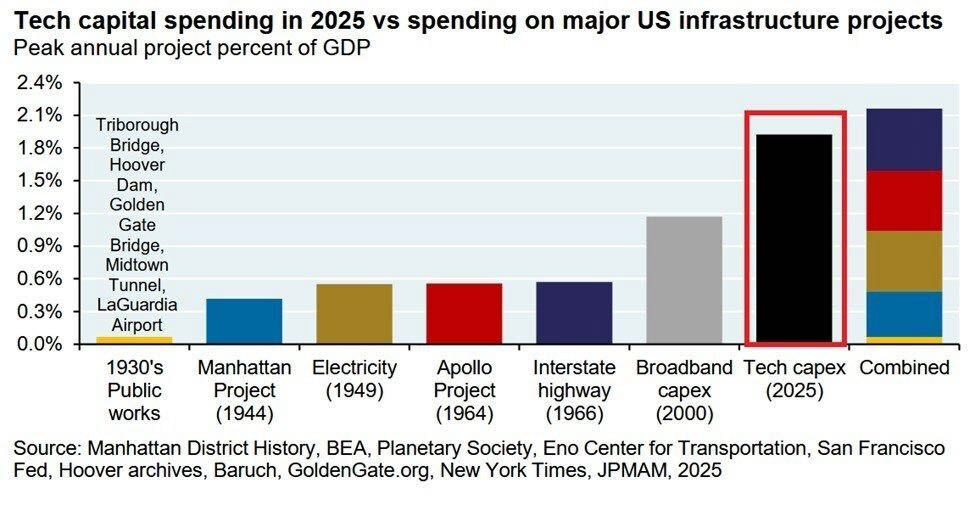
Again, it is worth noting that this is not possible today. But with frontier labs set to invest over a trillion US dollars in capex over the last year and this one, they will be hungry for more revenue streams to justify all that investment. The biggest economic pie of all is to directly replace both workers and the tools that they use by performing a job directly.
This is obviously a massive threat to many businesses (and many employees!) which is why we are calling it the omega threat. But there are several defences available, and we think there are some businesses that will be particularly hard for the frontier labs to crack. We also think that there are some businesses outside the frontier labs that are set to be massive beneficiaries of this if it does indeed materialise.
But we will leave those thoughts to the next installment!
In Conclusion
The threat that AI poses to Enterprise SaaS is multi-faceted. The days of blindly buying anything Enterprise SaaS and winning are over. But that doesn’t mean that many Enterprise SaaS businesses won’t survive or even thrive in this new environment.
Enterprise SaaS has been the king of business models for many years, but the best returns came during the initial period of disruption in the 2010s. We are again entering one of those periods of disruption, and are immensely excited for the hunt to find the new emerging leaders.
The King is dead, long live the King!
Great read. That stack overflow chart continues to blow my mind.
Great article. And yes we are seeing a demise yet when the individual has the an ability to write and deploy their own architecture and solution comes great responsibility. Privacy, security, governance, regulations etc. I would say that the next layer will be Claude or other coding AI needs to learn true enterprise architecture and data topology otherwise I see a lot of law suits and fines for the new king